

B2B Jewelry Plating & Surface Finishing for Fashion Jewelry Brands
PVD, water plating, polishing, brushed and matte finishes for stainless steel, brass, alloy and silver. Fast sampling, spec-based production, and consistent color control for private label and OEM/ODM projects.

Why Surface Finishing Matters in Fashion Jewelry
In B2B jewelry plating and surface finishing, appearance is more than a visual detail — it shapes product identity, perceived value, and market appeal. The right finish helps fashion jewelry collections align with brand positioning, buyer expectations, and commercial trends.
1. Shapes the First Visual Impression
Surface finishing directly determines the first glance. Even with the same design, polishing, brushing, matte finishes, bright gold, black, or gunmetal plating present completely different product temperaments.
2. Influences Product Positioning
Polishing suits classic, commercial lines. Brushing fits modern, minimalist, or unisex styles. Matte finishes elevate collections with a low-profile, designer-led luxury aesthetic.
3. Affects Market Acceptance
Mass retail prefers high-shine, standardized looks. Boutiques embrace brushed, matte, or vintage treatments. Men’s collections naturally gravitate toward gunmetal, black, and brushed surfaces.
4. Supports Brand Consistency
Standardized surface treatments help establish collection consistency, reduce visual deviation across batches, and significantly improve brand recognition.
“For B2B buyers, surface finishing is not only about appearance. It directly affects product style, perceived value, market fit, and collection consistency.”
Which Finish / Process Fits Your Project?
Start with your material, wear target, and visual direction—then narrow down the most practical finish route for your product.
Best for higher-wear products
PVD / IP plating
A strong fit for projects that need better wear resistance, stronger color stability, and a more durable finish for daily-use positioning.
Common materials: Stainless steel; selected brass or copper with controlled preparation
Typical buyer goal: Better durability and longer-lasting color
Best for broader color flexibility
Water plating
A practical choice for commercial programs that need a wider color range, scalable production, and a finish aligned with more cost-sensitive launches.
Common materials: Brass, copper, zinc alloy, and silver-based jewelry
Typical buyer goal: Flexible color development and better cost-performance
Best for a bright, classic look
Polished finish
Polishing creates a smooth, reflective surface that gives jewelry a cleaner and more refined appearance, making it a strong fit for classic and mainstream retail styles.
Common materials: Stainless steel, brass, silver, and alloy
Typical buyer goal: A cleaner shine and broader market appeal
Best for a more understated texture
Brushed finish
Brushing creates a fine directional texture that softens reflection and gives the product a more modern, restrained look, often used for minimalist or contemporary collections.
Common materials: Stainless steel, brass, and selected alloy styles
Typical buyer goal:A more premium, low-key visual effect
Best for matte texture and depth
Sandblasted finish
Sandblasting produces a dry, even surface texture with lower reflectivity, helping create a more tactile and design-led appearance before final plating or color treatment.
Common materials: Stainless steel, brass, and selected fashion jewelry bases
Typical buyer goal: Stronger texture and clearer style differentiation
Why Brand Buyers Work With CCK
Beyond plating capability, we help brands make better process decisions, reduce production risk, and move projects forward with more confidence.
Material-fit recommendation
Benefit: Reduce process mismatch
Match finishing methods to your base material early, helping avoid costly rework and wrong process selection later.
Thickness planning
Benefit: Balance cost and wear
Plan coating thickness around durability goals and price targets, so performance and cost stay aligned.
Sample approval control
Benefit: Fewer bulk deviations
Confirm finish, tone, and visual standards during sampling to reduce gaps between approved samples and bulk output.
Third-party testing support
Benefit: Easier compliance prep
Support testing documents and verification steps, making retailer and market compliance communication more efficient.
Milestone tracking
Benefit: Clearer project visibility
Track key stages from sampling to shipment, so your team gets clearer timing updates and fewer execution blind spots.
Private label packaging support
Benefit: Faster brand launch
Coordinate branded packaging with product finishing, helping reduce supplier handoffs and speed up launch execution.
Need help choosing the right finishing route for your collection?
Share your material, target market, or reference sample, and our team can suggest a practical plating and surface solution.
Proof You Can Review
Real production, quality, and compliance evidence buyers can review before moving into sampling or production.
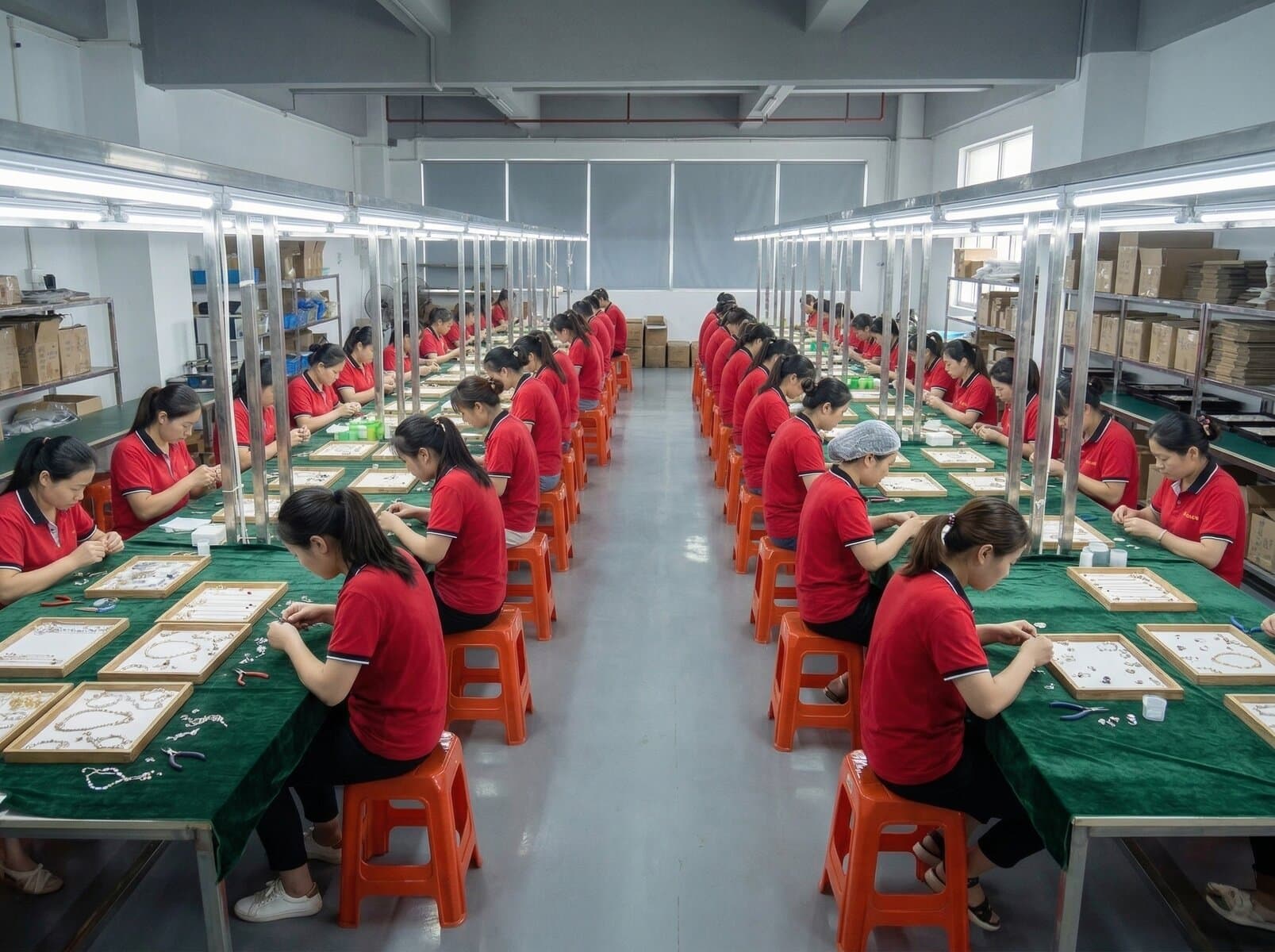
Factory and Production Visuals
See how your project is actually handled
Real workshop, finishing, inspection, and packing photos give buyers a clearer view of how products move through production—not just how a supplier describes the process.
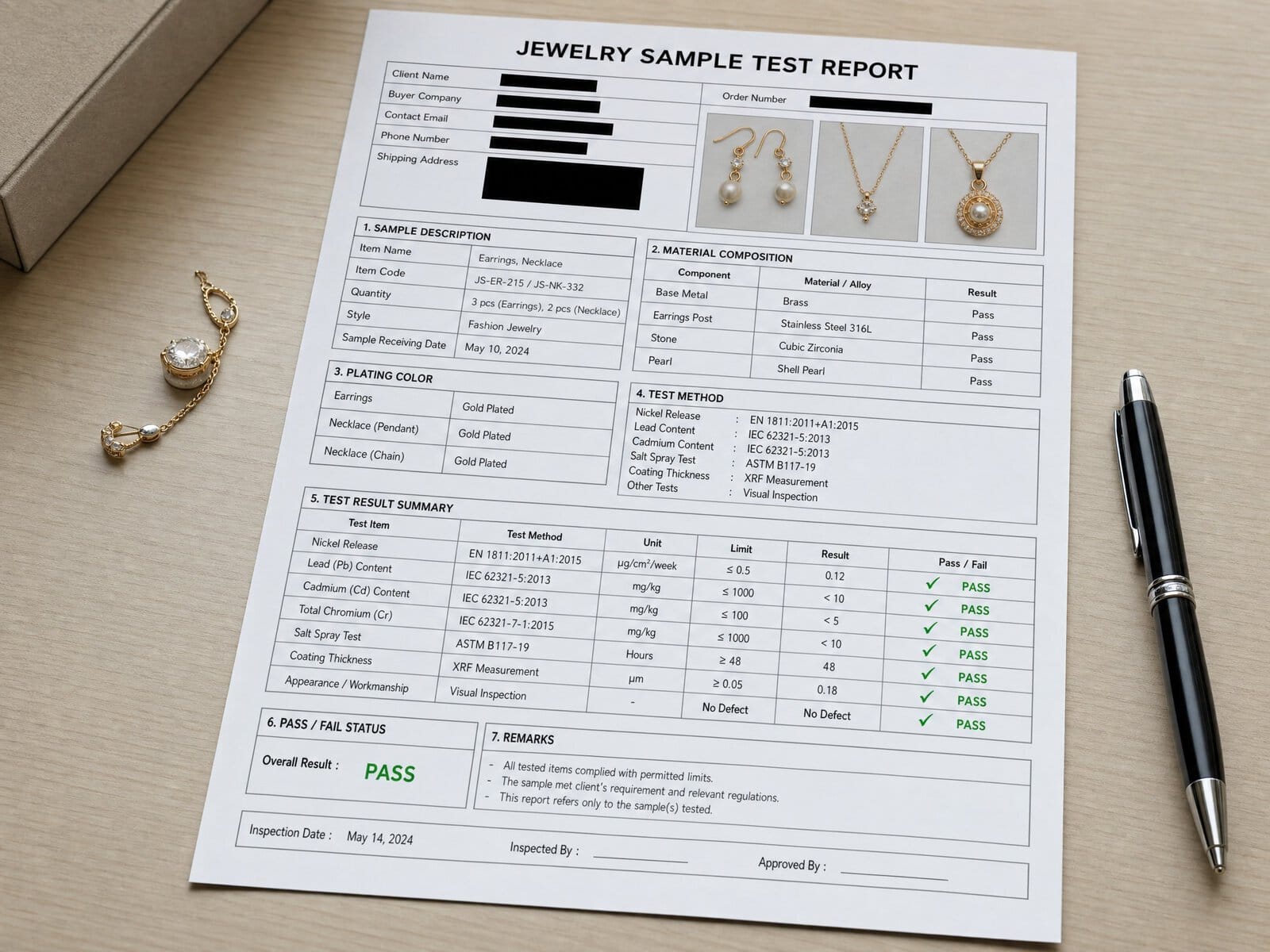
Testing and Compliance Samples
Review the documents buyers typically need
Sample report pages and document previews help buyers understand what testing support includes and what can be prepared for retailer, platform, or market compliance review.

Built for B2B Buying Teams
See whether we fit your business model
Clear buyer-type positioning helps brands, importers, wholesalers, and private-label teams quickly decide whether the program matches the way they source and launch products.
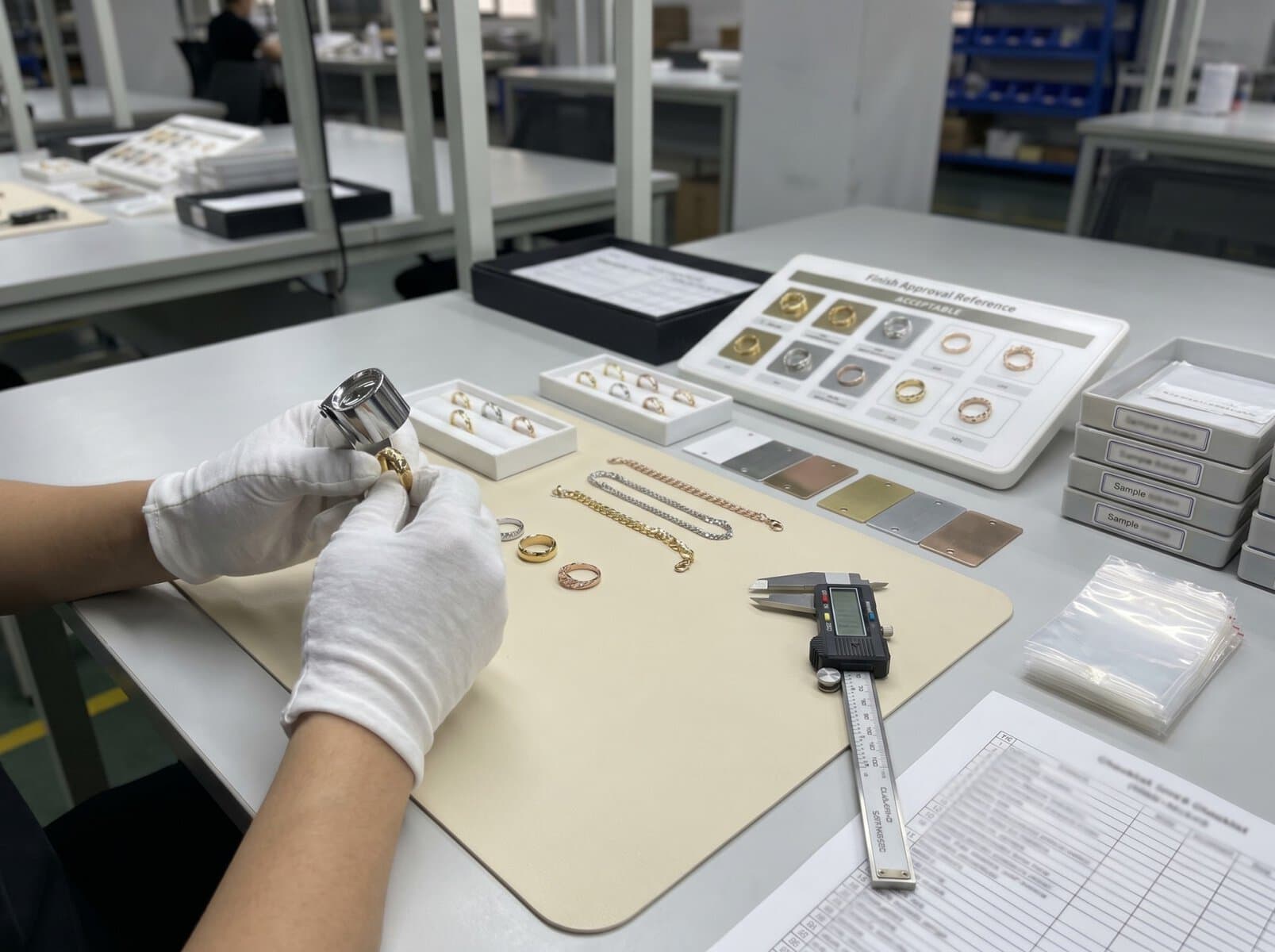
QC Checkpoints and Approval Flow
See where quality gets checked
Instead of simply saying the process is controlled, we show the checkpoints used to review finish, color, workmanship, and packing before shipment.
Project Snapshot
Key commercial and technical facts buyers usually need before moving to sampling.
MOQ
Typically from 100 pcs/style, depending on material, mold status, and total order volume.
Sample lead time
Typically 7–10 days for standard sampling; exact timing depends on mold and approval scope.
Suitable materials
Stainless steel, brass, copper, zinc alloy, and silver-based jewelry programs.
Main finishes
Polished, brushed, sandblasted, PVD/IP, and water plating, with thickness options based on wear and positioning.
Support
OEM / ODM / private label / packaging / labeling / testing support, depending on project requirements.
What We Can Offer
We provide end-to-end B2B jewelry plating and surface finishing solutions for fashion jewelry projects, covering finish development, plating execution, sampling, and mass production support.
Surface Finishing
Polishing
Brushed finish
Matte finish
Texture-based treatments
Plating Services
Vacuum ion plating (PVD)
Water plating
Multi-color development
Standard & custom colors
Development Support
Material & finish matching
Color & effect targeting
Sample prototyping
Multi-finish solutions
Production Support
Mass production management
Surface consistency control
Quality inspection (QC)
B2B customization support
Transparent Production Process
In B2B jewelry plating and surface finishing, a transparent and standardized production process helps buyers reduce uncertainty, improve product consistency, and move from sampling to bulk production with greater confidence.
Evaluating your material, target market, style, and pricing needs.
Suggesting the optimal finish and plating solution for the base structure.
Creating prototypes to confirm color, surface, and visual effect.
Locking in physical samples and color standards to prevent deviations.
Executing bulk runs with strict batch consistency control.
checks on color matching, surface integrity, and adhesion.
Buyer Cases: From Requirement to Result
See how different buyers selected the right finishing route based on durability goals, cost targets, and launch timing.
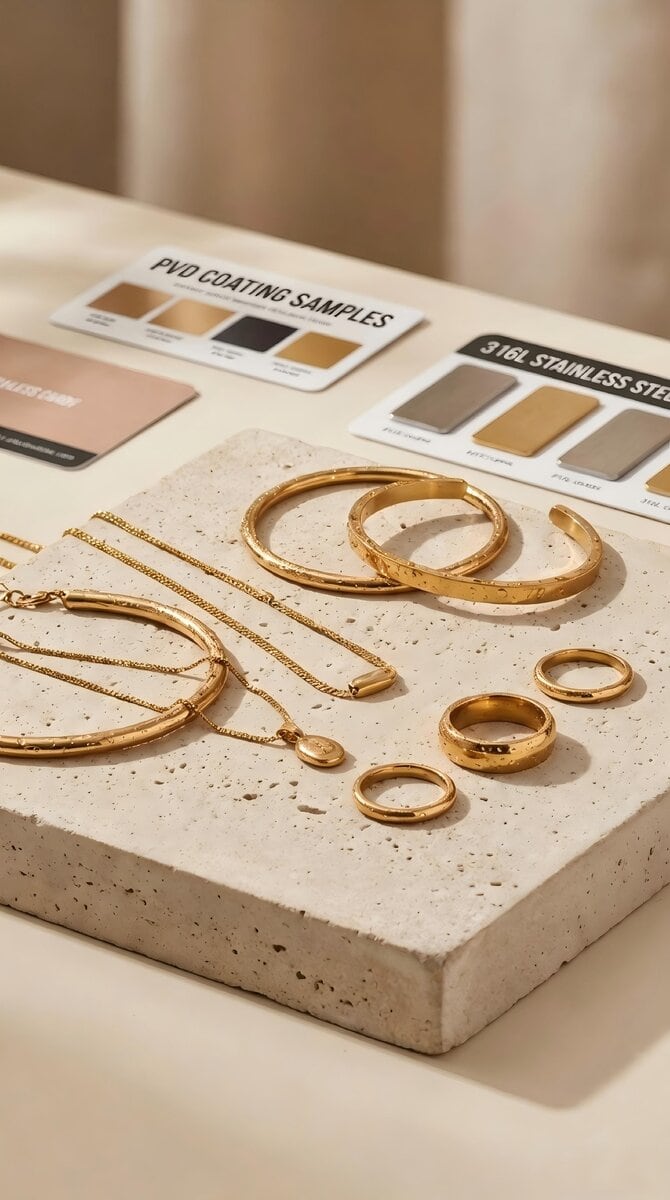
Case 01
Buyer profile
DTC fashion jewelry brand launching a waterproof stainless steel line
Problem
The buyer needed a finish that could support daily wear, maintain color stability, and fit a waterproof product position.
Recommended process
316L stainless steel with PVD vacuum coating
Selected thickness
PVD coating matched to a daily-wear positioning
Why this spec
PVD offered stronger abrasion resistance and better color retention than standard wet plating, making it a better fit for stainless steel daily-wear styles.
Sampling / delivery arrangement
Sampling followed the typical 7–10 day PVD schedule, with finish confirmation completed before production planning.
Result for buyer
The buyer moved forward with a finish that better matched its waterproof positioning, supported the intended durability target, and made repeat consistency easier to manage.
Case 02
Buyer profile
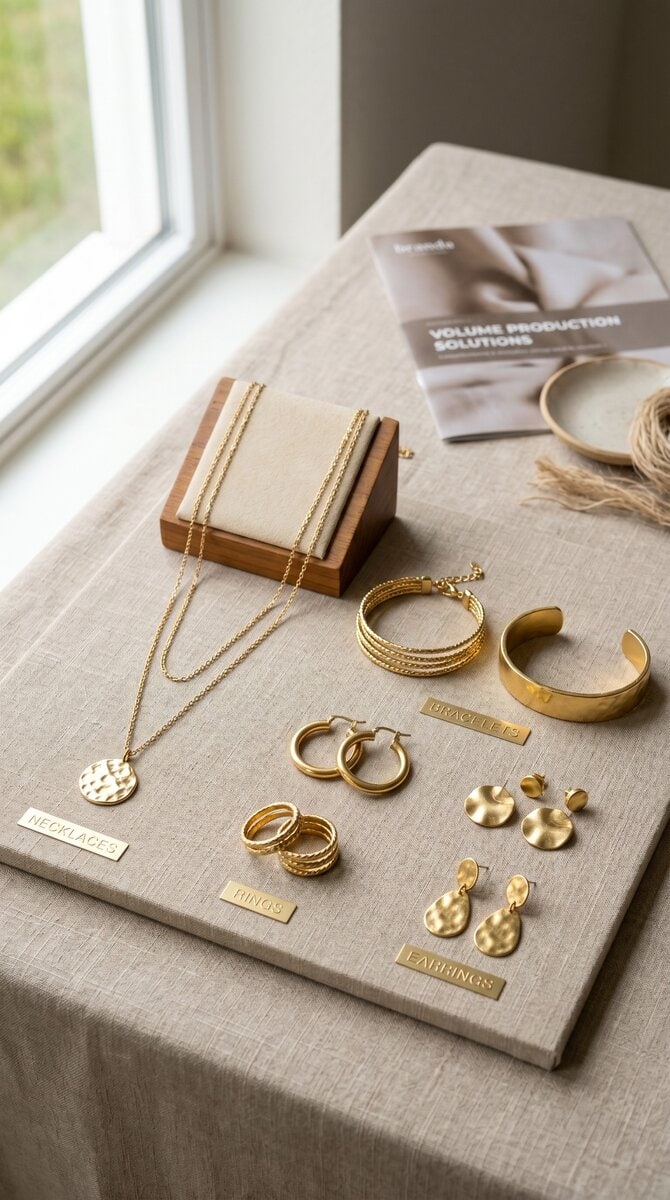
Importer developing a gold-tone fashion collection for volume retail
Problem
The buyer needed a finish that looked premium while staying aligned with a tighter cost target for volume launch.
Recommended process
Brass base with electroplating / water plating
Selected thickness
A thickness level selected to balance look, wear period, and cost
Why this spec
Electroplating was the more practical option for a fashion-driven launch because it supported the desired look without overbuilding finish cost.
Sampling / delivery arrangement
Sampling was arranged within the general 7–15 day window, with production timing planned based on approval flow and schedule.
Result for buyer
The buyer achieved a better cost-performance balance for launch and a spec that was easier to repeat across future orders.
Notes:
- Rhodium/Silver look on stainless steel is typically achieved via electroplating (wet plating), not PVD/IP. We’ll confirm the best process per SKU.
- The delivery date and minimum order quantity may vary depending on different materials and styles.
- Final thickness and color are confirmed through sampling approval, and reference standards can be retained for reorder consistency.
Core Finishing Techniques
In B2B jewelry plating and surface finishing, understanding the core technical differences helps brands and buyers choose the right process for their base material, budget, and durability goals. Different plating methods directly affect wear resistance, color performance, and commercial suitability.
PVD / IP Plating
Vacuum Ion Plating
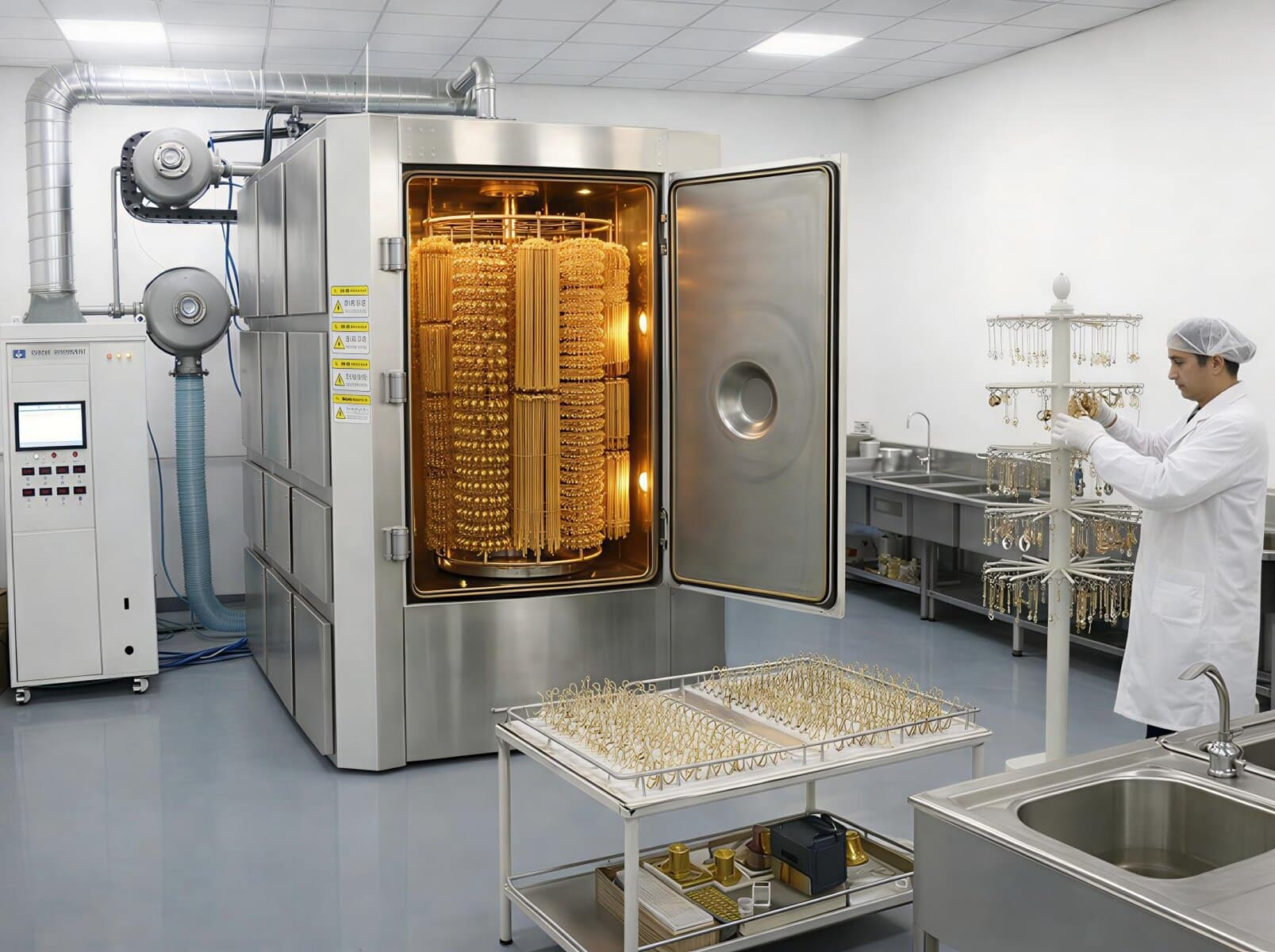
Vacuum ion plating (PVD/IP) delivers superior durability and consistency, making it the standard for high-wear fashion jewelry.
- Stronger coating adhesion
- Superior surface wear resistance
- High color stability over time
- Best for products requiring durability
Suitable Materials: Stainless steel is the most mature application. Can be used on selected brass/copper with strict surface preparation.

Traditional Electroplating
Water Plating
Water plating is a mature, traditional process favored for its extensive color range and commercial adaptability.
- Mature and scalable process
- Rich and flexible color options
- Widely used across the fashion jewelry industry
- Highly cost-effective for commercial volume
Suitable Materials: Extensively used for brass, copper, zinc alloy, and silver-based fashion jewelry.
“If your collection is based on stainless steel and requires better wear resistance, vacuum ion plating is the preferred solution. If your project is based on brass or alloy and needs flexible color development, water plating is usually the more practical option.”
Vacuum Ion Plating: Process & Control
Good pre-treatment and surface consistency are essential. In B2B production, plating performance is tightly linked to polishing quality, fixture control, and batch consistency.
- Base material inspection
- Surface polishing or pre-finishing
- Cleaning and degreasing
- Drying and fixture loading
- Vacuum chamber treatment
- Ion plating / color deposition
- Quality inspection and packing
Thickness Strategy: Fast-fashion prioritizes turnover and efficiency (basic thickness), while premium lines value durability and long-term consistency (higher thickness).
Water Plating: Process & Control
Surface preparation is critical. Stable results depend on substrate quality, proper pre-treatment, color consistency management, and clear sample approval before mass production.
- Base material preparation
- Surface polishing or texture treatment
- Cleaning and degreasing
- Pre-plating treatment
- Electroplating in liquid bath
- Color adjustment and finishing
- Inspection and packing
Quality Note: Surface defects on the base material are often magnified after water plating. Strict pre-plating QC is mandatory.
Thickness Standards & Options
For stainless steel jewelry, PVD/IP is typically built as a TiN (Titanium Nitride) base layer plus a gold-tone top layer. For wet plating (electroplating), thickness is usually specified by barrier + top layer. Below are the most common industry options used in B2B jewelry plating and surface finishing.
PVD/IP (Vacuum Ion Plating) — Stainless Steel
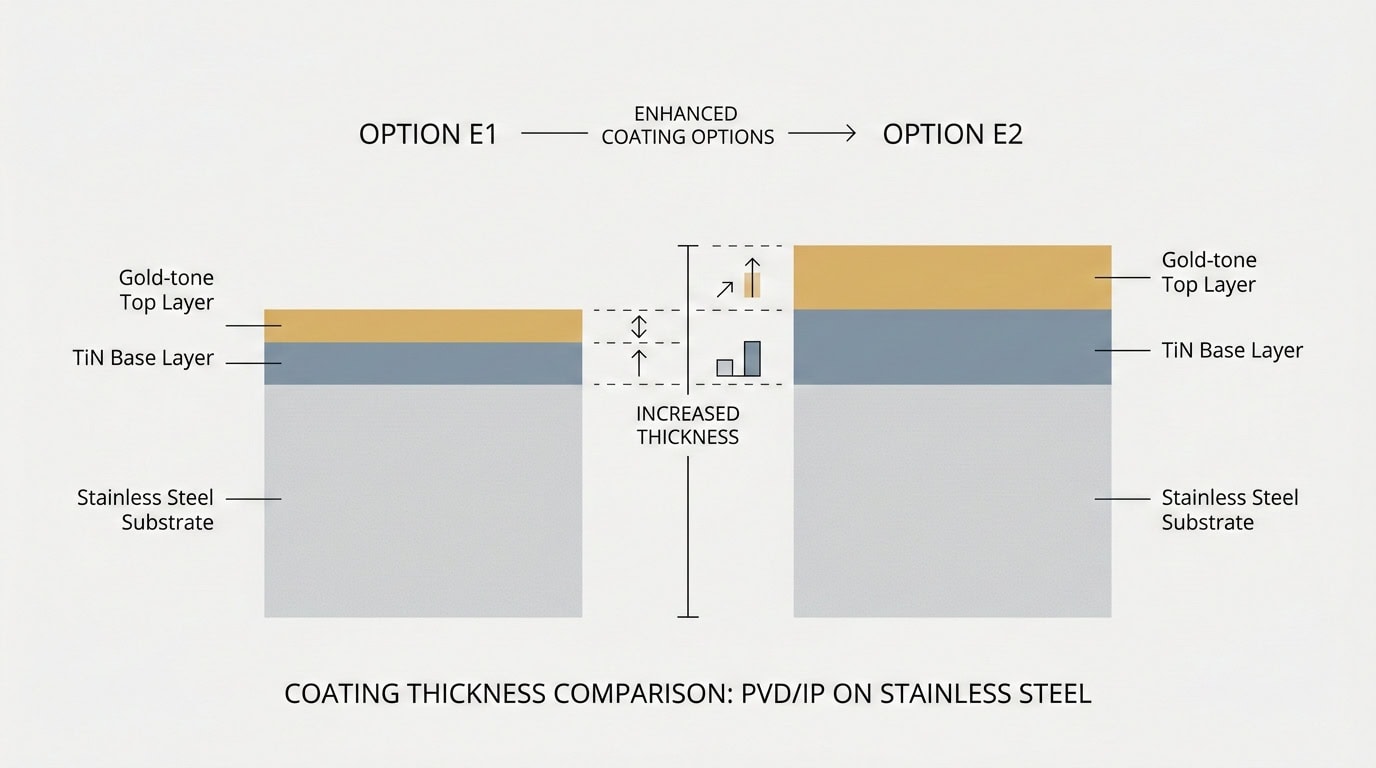
Option E1
Standard
TiN 0.4 μm + top layer 0.05 μm
Most common factory standard for mass production
Option E2
Thicker
TiN 0.7 μm + top layer 0.1 μm
For buyer specs / higher wear expectation (higher cost)
PVD/IP Color Options
- 24K Gold
- 14K Gold
- White Gold tone (platinum-tone system)
- Gunmetal (Gun Black / Hematite tone)
- Blue
- Colorful
- 18K Gold (most commonly requested)
- Rose Gold
- Black
- Coffee
- Chromium
Electroplating (Wet Plating) Thickness - 925 Silver & Brass/Copper (Show standards)
Rhodium Plating (Option B)
B1 (Common): Pd barrier 0.02 μm + Rh top layer 0.03 μm
B2 (Thicker): Pd barrier 0.03 μm + Rh top layer 0.05 μm (higher wear resistance)
B3 (Premium): Pd barrier 0.05 μm + Rh top layer 0.09–0.10 μm (higher cost)
Gold Plating (Option C)
C1 (Common): Pd barrier 0.02–0.04 μm + 18K gold 0.03 μm
C2 (Upon request): Pd barrier 0.05 μm + 18K gold up to 3.0 μm (higher cost; feasibility depends on design/base)
C3 (Custom): Thickness can be customized within a practical range, subject to feasibility review and sample approval (e.g., 3–5 μm, 5–8 μm, 8–10 μm)
Silver Plating (Option D: 999 Fine Silver)
D1 (Common): 999 fine silver 3–5 μm
D2 (Custom): 999 fine silver 5–10 μm (or as required, subject to feasibility)
Material x Finish Selection Guide
Choosing the right combination of material and finish is a critical step in B2B jewelry plating and surface finishing. The surface texture applied before plating influences visual style, perceived quality, and product positioning, making it easier to develop collections for specific markets and customer preferences.
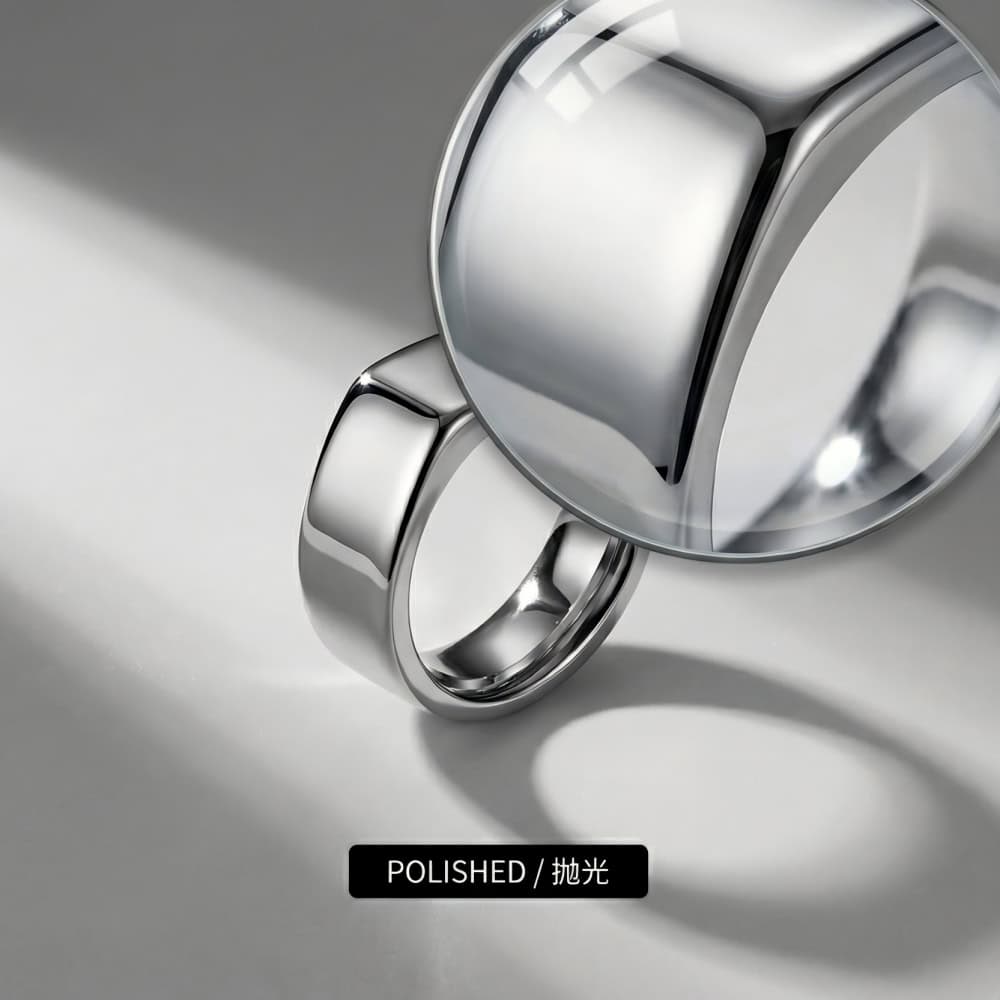
Polishing
- High-gloss surface
- Strong reflectivity
- Refined, commercial appeal
- Ideal for best-sellers & gifts
CLASSIC
ELEGANT
PREMIUM
GIFT-READY
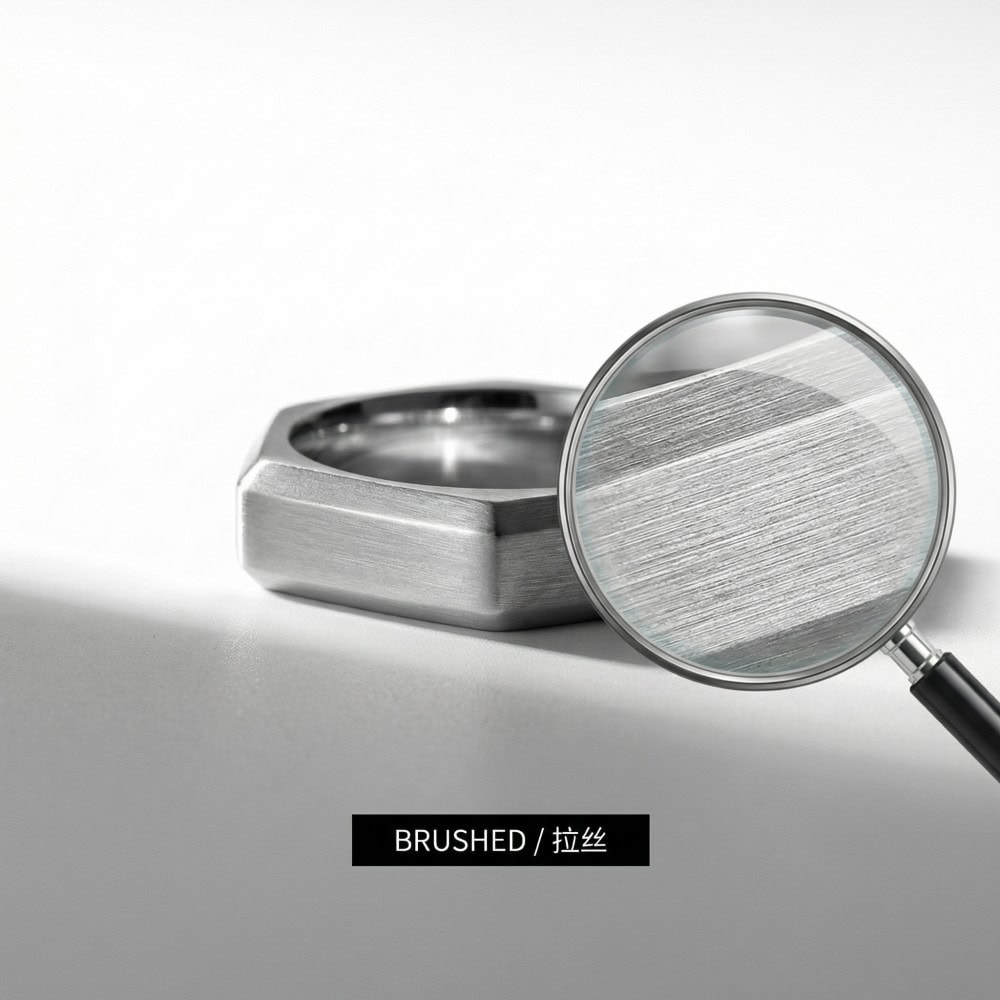
Brushed Finish
- Delicate surface texture
- Distinct metallic feel
- Restrained and modern
- Perfect for unisex & minimal designs
MINIMALIST
MODERN
UNISEX
STRUCTURED
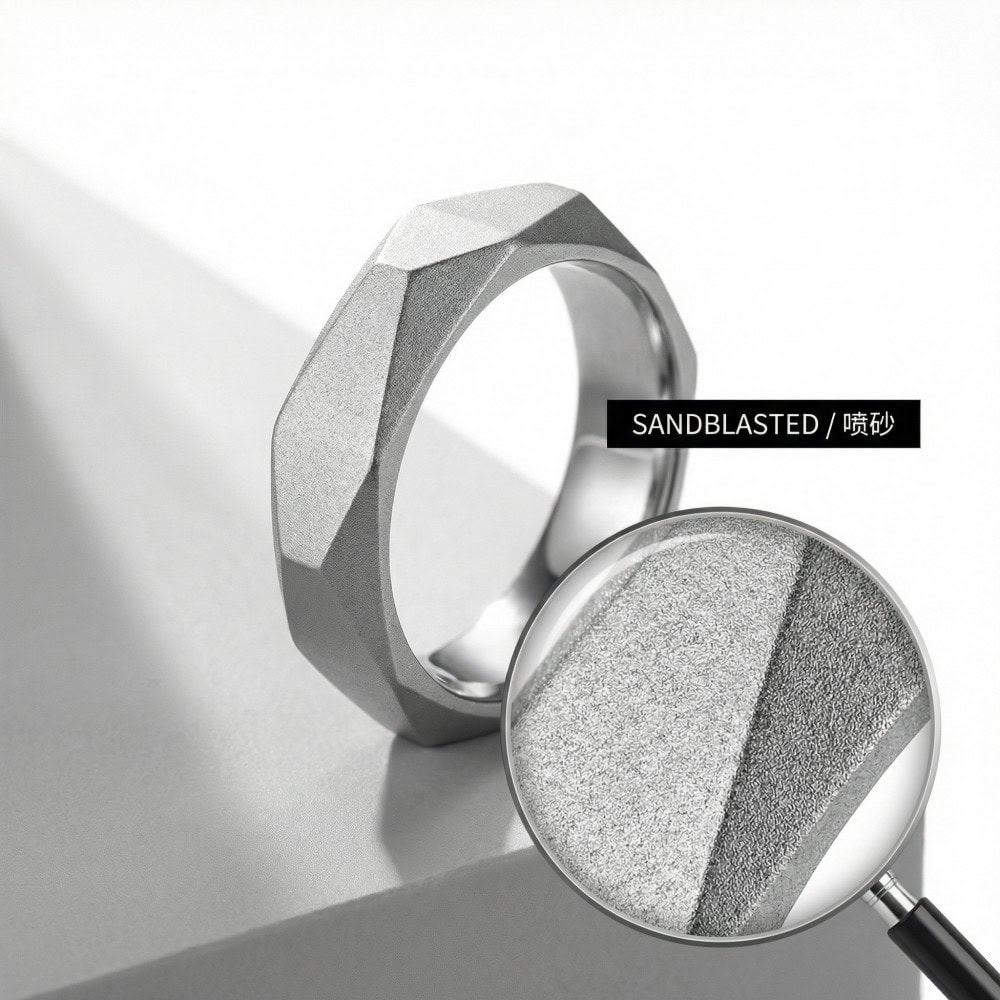
Sandblasted
- Low reflectivity
- Softer visual impact
- High-end, design-oriented
- Used in boutiques & designer lines
QUIET LUXURY
DESIGNER STYLE
CONTEMPORARY
BOUTIQUE
FAQ Hub
In B2B jewelry plating and surface finishing, polished, brushed, and matte finishes are among the most common surface treatments used in fashion jewelry. Each one creates a different visual effect, price perception, and market fit.
A reference photo, material preference, target finish, expected quantity, and any durability or price requirements are usually enough for an initial review.
Vacuum ion plating is generally more suitable for stainless steel and products requiring stronger wear resistance, whiYes. We can coordinate packaging, labeling, and product finishing as part of a broader OEM or private label program.le water plating is widely used for brass, copper, and alloy jewelry requiring flexible color development.
Yes. Once a sample is approved, we retain the finish reference and production notes to improve reorder consistency. Final repeatability still depends on material, structure, and finish specification.
Absolutely. We can recommend suitable finishing and plating solutions based on your material, market positioning, product style, and pricing needs.
Contact us
Contact us for professional services!
Looking to elevate your jewelry line? As a fashion jewelry manufacturer, we combine consistent quality, scalable capacity, and cost-effective pricing to support your brand’s growth.
- CCK Jewelry (Dongguan) Co., Ltd.
- Bldg. 1, Lianyi Industrial Zone, Chang'an Town, Dongguan, Guangdong, China
- info@cckjewelry.com
- +86 159 7563 4134
Follow us:

